
Looking For Something Florida Keys Related?
Search here for what you want (ads also appear)
Search here for what you want (ads also appear)
Florida Keys Shark Fishing Is THE Sport Fishing Adrenalin Rush
Florida Keys shark fishing has become the ultimate adventure for sport fishing enthusiasts.
However for many people, just the sound of the name shark makes their blood run cold.
They envision heartless, merciless killers who stalk, rip and tear. They see blood dripping from horrible gaping mouths.
In truth, not all types of shark are like this. Some, like the spinner shark and blacktip shark, are even kind of cute. Nor are all sharks dangerous - well at least not very dangerous.
However all sharks are becoming in varying degrees, an endangered species worldwide. The reason for this is over fishing, and it's usually the recreational fisherman who is responsible.
This is one of the reasons why most fishermen opt to go fishing for shark with a qualified fishing guide.
Florida Keys fishing charter Captains know what is allowed and what isn't. They also believe in safety first. As important as that word is when out on the water, it's takes on a whole other level of meaning when you're shark fishing.
The fact that these Florida Keys fishing guides have the experience, and the necessary fishing equipment so you can have a fun, productive and safe fishing experience is important - for you AND the shark.
As A FishingBooker Affiliate I Can Earn Small
Booking Commissions At No Extra Cost To You
Want A Shark Fishing Rush?
Best Florida Keys
Shark Fishing Charters!

Want A Shark Fishing Rush?
Best Florida Keys
Shark Fishing Charters!
Why Are Sharks Endangered
And Common Shark Facts
Over fishing is the primary reason why sharks are becoming a threatened species. This is partially due to the fact that people typically don't have an affinity for sharks. They'd sooner kill one then leave it out there to kill them.
And Common Shark Facts
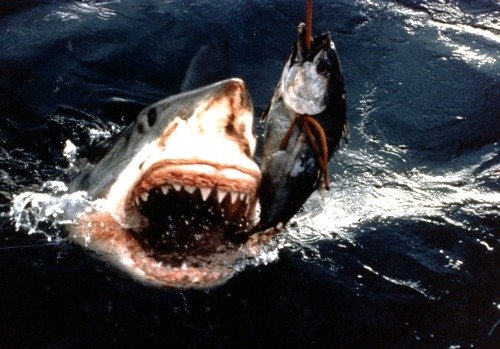

Dangerous and Angry Shark Attacking Bait
Florida Keys Public Libraries, Don DeMaria Collection, Flickr
Florida Keys Public Libraries, Don DeMaria Collection, Flickr
Second, sharks are plentiful, or so we thought. They're typically found in saltwater but both the bull shark and river shark can handle freshwater.
Shark can be found when Key West flats fishing, or while Florida deep sea fishing at depths of 6,000 feet or more! Unfortunately the once large numbers of shark are shrinking substantially each year.
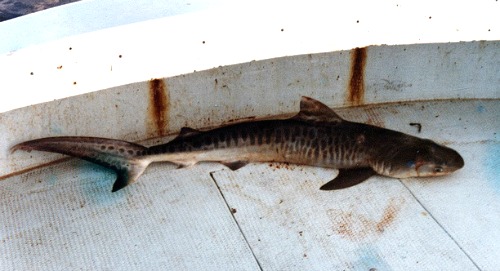
Shark Caught Florida Keys Fishing
Florida Public Libraries, Don DeMaria Collection, Flickr
Florida Public Libraries, Don DeMaria Collection, Flickr
Third, Florida Keys shark fishing is easy, especially if blood is involved. With their keen sense of smell, shark are rather like the blood hound of the water. If you supply a source, they'll come and gladly get dinner.
Their sense of smell is so fine tuned that they can detect the scent of 1 drop of blood in 1 million drops of seawater. The nurse shark's olfactory senses are even more developed as they have nasal barbels that are located outside of the nostrils and mouth. These barbels give the nurse shark an almost catfish type of appearance.
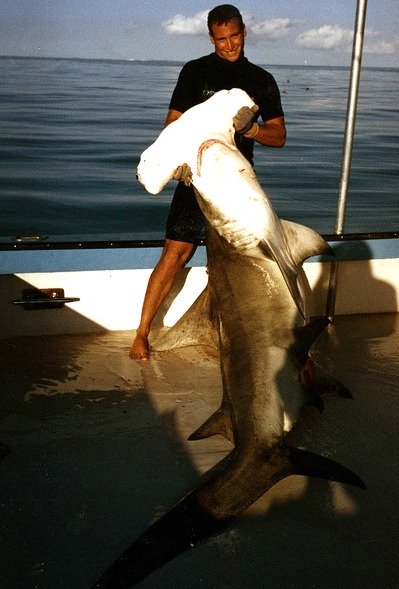

Landed Hammerhead Shark
Florida Public Libraries, Don DeMaria Collection, Flickr
Florida Public Libraries, Don DeMaria Collection, Flickr
The fact that sharks are drawn to the scent of blood is the key reason they're so dangerous. This is especially true for divers, snorkelers and anyone playing in the water.
If you nick yourself on a sharp piece of coral, scratch a mosquito bite, or do anything that draws blood, you risk the chance of a shark attack.
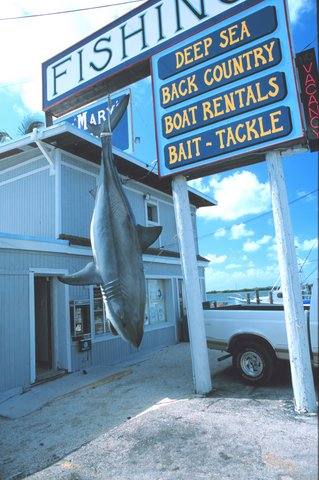
Shark Hanging Outside by a Fishing Sign
www.photolib.noaa.gov
www.photolib.noaa.gov
Fourth, you can go Florida Keys shark fishing anywhere. You can wet a line off a bridge or a pier. You can even catch one while sipping a beer in your own backyard.
Of course if you go Florida Keys shark fishing in deeper water you'll catch the bigger shark. Closer in you'll still bring in some big Florida shark, although the average length is around 2' - 5' in the coastal areas.
Last but certainly not least, is the thrill you get when shark fishing in Florida. A hooked shark is about as crazy as it can get at the other end of a fishing line. The thrashing and fighting will have your adrenalin pumping for days as you relive each wrenching tug.
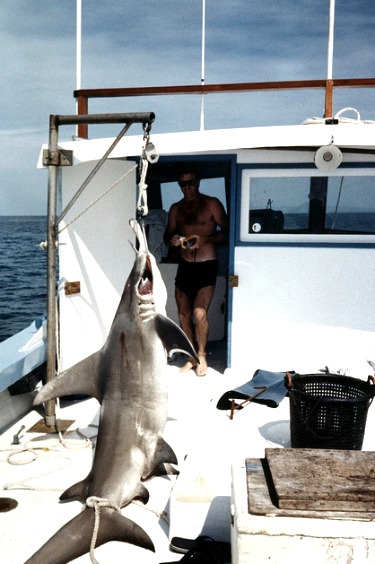

Large Caught Hammerhead Shark
Florida Keys Public Libraries, Don DeMaria Collection, Flickr
Florida Keys Public Libraries, Don DeMaria Collection, Flickr
As of late 2011, it was determined that two very popular shark species were highly endangered. Both the hammerhead and tiger shark are now under a protected government umbrella enforced by Florida Keys shark fishing restrictions.
However, until more fishermen adopt the catch and release mentality, it will take some time for the different shark species to make a strong comeback. Til then, they'll stay on the precipice of danger.
Florida Keys Shark Fishing
Tips and Techniques
When Florida Keys shark fishing, people usually go out into the deeper, open water or in the channels and around bridges.
Tips and Techniques
Standard equipment usually entails heavy rods, heavy line, 200 - 250 monofilament leader or heavy wire leader, and large hooks typically up to 10/0.
If you're spin casting, you'll also want to use a lot of drag so the shark doesn't swallow the line. If you let the shark swallow it, and the line gets into his gut he'll be able to bite right through. To prevent this, use locked drag and hook the mouth. This way he'll only be able to bite the heavy mono or wire leader and reduce the risk of escape.
When Florida Keys shark fishing, include in your arsenal some chum, or nice cut up fresh bait such as tuna, bonito, or barracuda. For added excitement plan on going barracuda fishing first, then hook one on and begin to troll. This preferred shark treat is guaranteed to entice them in.
Tiger Shark Fishing
Courtesy of YouTube and BNM Charters
Courtesy of YouTube and BNM Charters
The magic of the fresh scent of blood combined with the sound of a barracuda trying to get off the hook is the ringing of dinner bells to a shark. Now you just have to sit back and wait for that blood pumping adrenalin fishing adventure to begin.
Florida Keys shark fishing is incredibly popular because they're one of the easiest fish to catch. Anyone can catch a shark. This is why some anglers feel that enticing them with bait is too much like child's play.
More often you'll find that avid sport fishermen have decided to up the ante. Increasing the challenge by Florida Keys fly fishing with lighter weight tackle is becoming one of the most popular ways for going shark fishing. This also gives the angler the opportunity of sight fishing as opposed to throwing out 'dinner' and waiting for the guest to arrive.
In reality, sight fishing makes the event more of a hunt. The sport fishermen is able to choose the fish he wants. This possibly makes Florida Keys shark fishing safer as you don't have to wonder who or what is at the other end.
For example, if you see a tiger shark, you'll probably pass. If it's a smaller blacktip, spinner, or blacknose shark then you'll be inclined to toss the fly and see if the shark is up to your challenge and willing to take the bait.
Picture yourself Islamorada fishing in a kayak or canoe, floating on the calm shallow water. Your mission is shark fishing using nothing but 20 pound light weight tackle. The thrill is obvious. It certainly equals the pulsating excitement of fighting a crazed mako shark while offshore fishing Florida Keys deeper waters.
No matter what method you employ when Florida Keys shark fishing, you need to remember these fish are not happy about being caught. They're not just unhappy about it, they're super angry.
It's important to never forget that shark can pose a real danger to you. You need to be wary, and make sure you don't get any body parts too close to their mouths when cutting the line.
If this is your first time shark fishing, you'd be advised to go out with a qualified Florida Keys charter fishing company - at least until you know what to expect and what do do when catching shark.
Popular Florida Keys Shark Species
There are many shark species in the waters around the world and off the Florida Keys. Some of the shark species more commonly found in the Florida Keys are blacknose, blacktip, bull, hammerhead, lemon, mako, nurse, sandbar, spinner and tiger shark.
Some shark species are more dangerous than others. Mako, and tiger are two types of shark to be especially careful of in the waters off the Florida Keys. Others, like the blacknose shark pose little to no problem for humans.
Sharks are also relatively fast swimmers. They have a cruise speed of about 5 miles an hour but when they're ready to attack, they can accelerate up to 12 miles an hour. The fact that shark are fast swimmers amplifies when you're near one of the more aggressive shark species.
For example, the mako shark has a nasty disposition and unfortunately is able to reach speeds of 30 miles per hour. If you're in the vicinity of a mako shark, you'll need to exercise caution and make sure you can get to safety quickly, or properly protect yourself from a shark attack.
Blacknose Shark
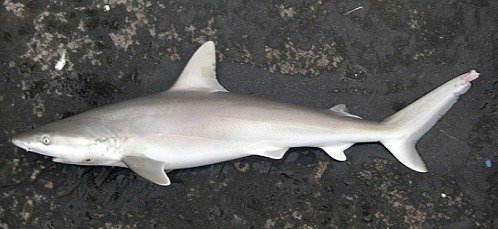

Landed Blacknose Shark
www.wikimedia.org
www.wikimedia.org
The blacknose shark is smaller, averaging about 5 feet in length and is often targeted by the larger types of shark. It feeds on smaller fish and spends much of it's time in shallow water in lagoons and Florida Bay where the bottom is sandy or muddy. The blacknose shark is not aggressive and poses the least threat to man.
When Florida Keys shark fishing, blacknose shark are great to fly fish for. You can also use light weight spin cast tackle. This is also one of the more popular eating fish in the shark family.
Blacktip Shark
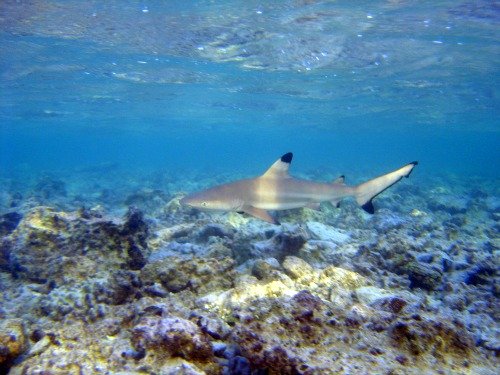

Florida Keys Blacktip Shark
www.noaa.gov, Photo David Burdick
www.noaa.gov, Photo David Burdick
Blacktip sharks average about 5 feet in length, and for their size and weight, they put up a terrific fight when hooked. This is why it's one of the most fished for of shark species.
Once caught, blacktip shark typically leap and jump into the air, fighting to get off the hook. This drama considerably adds to the fishing fun of reeling in a blacktip shark.
Blacktip shark are found in all the waters surrounding the Keys, including the shallow flats where they make a good choice for Florida Keys fly fishing. The younger ones are also typically found nearer to shore.
When Florida Keys shark fishing for blacktip, you can use a canoe or kayak. If you're canoe or kayak fishing, you may determine it to be safer to go blacktip shark fishing for smaller ones.
You also must successfully wear the shark out before bringing it close in. Otherwise, even a small blacktip shark can be dangerous or capsize the canoe or kayak.
Out of the types of shark found off the Florida Keys, the blacktip shark is the one that usually is not aggressive. If it approaches, it typically can be scared off without too much trouble.
The exception to this rule is if other sharks are present and a feeding frenzy is going on. In that case, if provoked, the blacktip shark will most likely attack. If a blacktip shark attacks, unlike the tiger shark or mako shark who remove limbs or worse, the blacktip shark usually only removes chunks. This means a blacktip shark attack is rarely life threatening.
Oddly enough, considering these blacktip shark facts, the greatest number of shark bites in Florida happen to be attributed to the blacktip.
Bull Shark
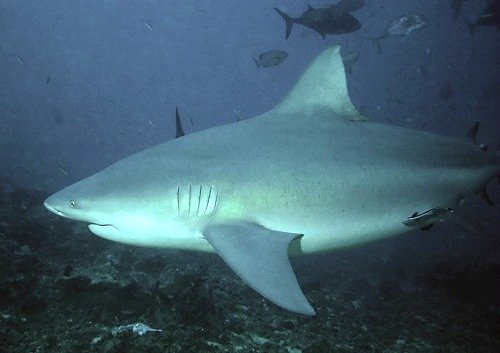
Prowling Bull Shark
Photo Courtesy of Pterantula, Flickr
Photo Courtesy of Pterantula, Flickr
Florida Keys shark fishing for bull shark is very popular because they're found everywhere, including the freshwater lagoons and rivers.
They'll swim in water as shallow as three feet and unfortunately bull shark have a history of attacking humans because they go where we go. They will also attack large creatures, which again is why humans are at risk around bull shark.
Bull sharks are not in the least bit particular about what they eat. When you consider their incredible vision, keen sense of smell, and the fact that they're absolutely everywhere, this shark species deserves to be feared.
Considering these ominous bull shark facts, they're still a popular species for Florida Keys shark fishing. The reason is they're die hard fighters. When you hook a bull shark, you'll experience a heart pounding battle that will have the hair on the back of your neck standing up even when this fishing adventure is over.
Hammerhead Shark
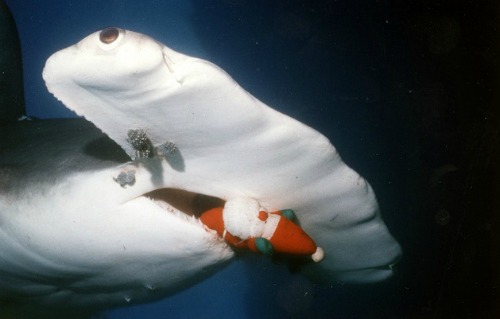

Florida Keys Hammerhead Shark With Santa Claus In Mouth
Florida Keys Public Libraries, Don DeMaria Collection, Flickr
Florida Keys Public Libraries, Don DeMaria Collection, Flickr
The hammerhead shark is probably one of the oddest looking shark species. It's nose has a flat, disc like horizontal shape at the end. The wider spread of the nostrils and the resulting wider spacing between the eyes enhance both it's ability to smell and see.
Hammerhead sharks have a number of sub-species such as the bonnethead which is popular when Florida Keys fishing. The bonnethead is a small, very timid shark that presents no danger to man.
The 8 different hammerhead species average anywhere from about 6 feet in length to the monster Great Hammerhead shark which averages 20 feet in length.
The Greater Hammerhead typically feeds on the ocean floor looking for rays, which means it's not usually found where humans are. However, if provoked, due to the large size and bad temper of the Great Hammerhead shark, they could inflict serious harm and damage.
Lemon Shark
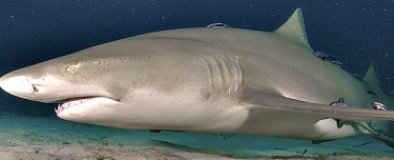

Florida Keys Lemon Shark
www.en.wikipedia.org, Photo Albert Kok
www.en.wikipedia.org, Photo Albert Kok
Lemon sharks are one of the larger shark species and are most often caught when flats fishing. When Florida Keys shark fishing, they're one of the better choices for fly fishing.
Lemon shark are often found lying on the sandy bottom which is unusual for sharks since the sand gets in their nostrils making it difficult for them to breathe. Nurse sharks are another type of shark that will lie on the sandy bottoms.
Since the pigmentation of the lemon shark is similar to the sand, they're also difficult to see when Florida Keys shark fishing.
The lemon shark is also fairly easy going and is highly unlikely to attack humans. A few incidents have been reported about lemon shark attacks but no deaths have occurred.
Mako aka Shortfin Mako Shark
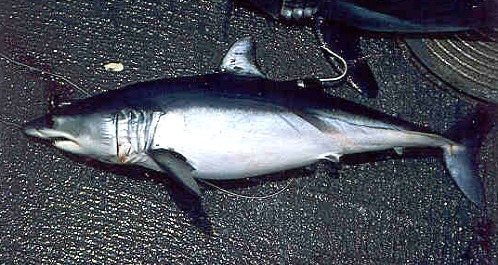

Shortfin Mako Shark
www.noaa.gov
www.noaa.gov
The mako shark is perhaps one of the most deserving shark species to be feared. Mako sharks are absolutely vicious when caught and are very large in size which makes them even more dangerous.
Mako shark have been known to leap 20 feet or more into the air. Always on the defense and in full attack mode, they've crashed into, as well as leaped into, the boats of their captors.
Picture one of these monsters leaping into a boat. What do you do? There's not much room in a boat to begin with. Factor in a super angry, over sized mako shark that's thrashing about taking up even more valuable space.
How do you get rid of it? How do you avoid getting bit or killed? This is one of those true "Jaws" moments, and if it happens to you, you want to make sure you get out alive.
Florida Keys shark fishing is a lot of fun, but hunting for mako shark needs to be reserved for the more experienced sport fisherman. This is not a fish for the weak of heart. You need to be well prepared before you decide to go mako shark fishing because they will come back and bite you.
Nurse Shark
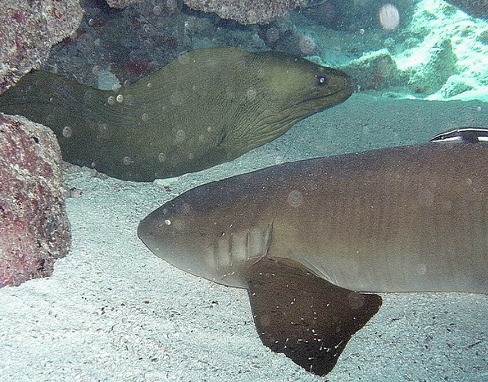
Florida Keys Nurse Shark Facing Off With an Eel
Photo Courtesy amanderson2, Flickr
Photo Courtesy amanderson2, Flickr
The nurse shark is a slow moving shark with an incredible sense of smell. They average about 10 feet in length, and since they're nocturnal feeders, they're sluggish during the day when humans are around.
If you like to Florida Keys scuba, they're the shark that is most often seen by scuba divers reef and wreck diving.
The nurse shark is also a rather odd looking creature. It's nasal barbals hang down giving it a catfish-like appearance.
Because it will often lay on the sandy bottom of the ocean, this 'laziness' and it's 'fish'-like appearance can make it seem non-threatening.
Don't ever be fooled into thinking a nurse shark is just a slug not to be concerned about. Even though they're not normally a problem, they'll viciously attack if provoked - or hmmm ... interrupted during one of their many sexual encounters.
Sandbar Shark
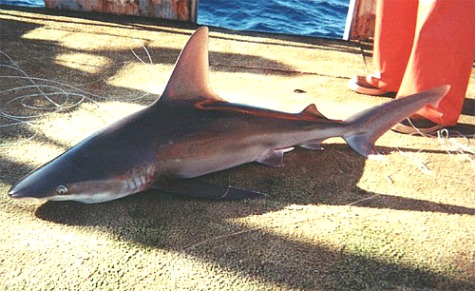

Caught Sandbar Shark
www.noaa.gov
www.noaa.gov
The sandbar shark is typically found in shallow water over muddy or sandy bottoms, hence the name. It's also referred to as the brown shark or thick skinned shark.
Averaging about 7 feet in length, the sandbar shark is one of the largest types of shark. This shark species migrates to the Florida Keys every winter, although some stay as year long residents. When Florida Keys shark fishing, the sandbar shark is the most commonly caught of all the sharks.
Spinner Shark
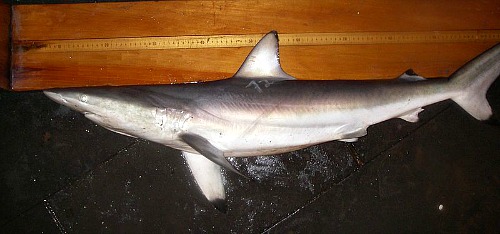

Landed Spinner Shark
www.noaa.gov
www.noaa.gov
The spinner shark or brown shark is sleek and averages between 5' and 6' in length. They're a schooling shark and they also chase schooling fish. When they're in attack mode and enter a school of fish they'll often leap out of the water in a spinning motion, hence the name.
Spinner shark are not vicious and there's never been a report of a spinner shark hurting humans. There have been reports however of them leaping over surfers who happen to be in their feeding zone. An incident like that would certainly give someone reason to pause for a moment, and take a deep breath before chasing the next wave.
This shark species also happens to be rather cute, especially when they're still pups.
Tiger Shark
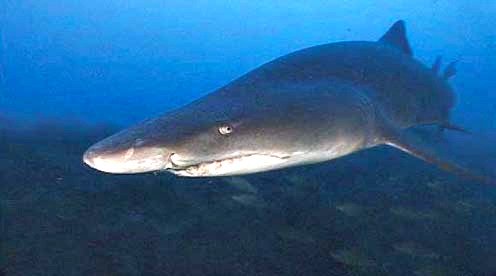

Vicious Tiger Shark
www.noaa.gov, Photo Paula Whitfield
www.noaa.gov, Photo Paula Whitfield
Tiger sharks are to be feared - no question. Second to the Great White for attacks on humans, these apex monsters are voracious feeders, who eat and attack most anything.
Tiger shark also prowl the shallow waters where humans like to play. This makes them one of the greatest risks to anyone enjoying beach time, and splashing in even just a few feet of water.
When a tiger shark decides to bite, it doesn't nip. It rips, tears and eats. Knowing this, be especially watchful for them, even when you don't think it's possible for a shark to be 'out there'. This is when you want to think "Jaws" just to stay safe.
It's important to remember when Florida Keys shark fishing, or perhaps "big game hunting" is a better phrase, that caution must be exercised.
Even the most played out tiger shark will bite, even if close to death. When tiger shark fishing, never bring one to your boat until it's been completely exhausted. Always exercise extreme caution when working to cut it free.
When Florida Keys shark fishing you'll find that currently there's a ban on tiger shark. However, if and when it's lifted, and you decide to keep your shark, remember this. In the excitement of landing a shark, people often hurry to get close. Don't do this until you're absolutely sure the tiger shark is dead.
When Florida Keys shark fishing, you'll find that the combination of fishing techniques and species of shark to target are the perfect formula for fishing fun on your next Florida Keys vacation.
Looking For Something Florida Keys Related?
Search here for what you want (ads also appear)
Search here for what you want (ads also appear)
Recent Articles


-
Christ of the Abyss, Top Key Largo Diving & Photo Site
 Christ of the Abyss at Key Largo Dry Rocks, best diving, snorkeling and photography site also popular for underwater weddings and funerals.
 -
Flaglers Barge, Top Florida Keys Scuba Snorkeling Site
 Flaglers Barge, close to spectacular Sombrero Reef is a magnificent wreck diving spot that's also perfect for Florida Keys snorkeling.
 -
Cayman Salvage Master, Unusual Advanced Key West Dive Site
Cayman Salvage Master is an intact, top scuba diving Key West site to explore when wreck diving, due to unusual features left on board by passengers.
You May See Ads Here
You May See Ads Here



SAVE BIG WITH THESE
KEY WEST DISCOUNTS
KEY WEST DISCOUNTS

Local Weather Zip Codes
Key Largo - 33037
Marathon - 33050
Key West - 33040
Key Largo - 33037
Marathon - 33050
Key West - 33040
|





FTC Compliance Disclaimer and Affiliate Program Sponsor Disclosure
As an Amazon Associate I earn from qualifying purchases such as the various
items displayed on my website available through Amazon. We also earn
advertising fees by advertising and linking to other affiliate sites
florida-keys-vacation.com is associated with including but not necessarily
limited to Amazon, Conversant/Commission Junction, Fishingbooker.com,
Google Adsense, and Sitesell.
Florida-Keys-Vacation.com, does not sell any personal information and you
can read about this and the California Consumer Protection Act
on our Privacy Policy page.
We are currently testing various affiliate monetization options, including
Conversant/Commission Junction, Adsense, Sitesell, Fishingbooker
and Amazon Associates Affiliate Program. Expect to see a variety
of banner, image, and text link ads throughout this site, in various places,
as we try out different sizes, styles, formats, companies and programs, to
determine which ones are a best fit for this site. You can expect to see
ads moved and changed until we find the ones we feel best fits our goals.
We've been approved by Google to participate in one of their Google ad
programs, that displays "intelligent" and "responsive" ads based off of YOUR
internet browsing search history, showing you ads based of YOUR interests.
These new AI ads are part of Google's artificial intelligence program, known
as RankBrain, and are displayed based on which web site you've visited in
the last 28 days, as well as items you've bought off online stores, and any
search terms you've typed into your browser. We may occasionally opt into
this ad program but we have no control over what ads this AI ad program
displays, as the ads are based off your browser history and not our
web site topics.
To learn more about the FTC laws you can visit the FTC and also go to
their rules and guides page.
Promotions, discounts and offers identified throughout this website are made
available through a variety of sources including the above listed affiliates of
florida-keys-vacation.com. As such, this website may receive compensation
for products and services that are subsequently purchased through the
referred affiliate. These monies help fund, operate and maintain this website.
In operating this website we are associated with a variety of other companies.
They may be social media websites, or affiliate organizations that sell a variety
of products through merchants such as Conversant/Commission Junction or
Amazon, Google and their different product lines, as well as Fishingbooker.com
and Sitesell.
The following list of companies and social media groups we're associated with
provides links to their different pages, which include Privacy Policy, Cookie
Policy and other important disclaimers.
Adsense EU User Consent Policy
Adsense Privacy Policy
Amazon Privacy And Cookie Policies
Conversant/Commission Junction Privacy Policy
Facebook Cookies & Other Storage Technologies Policies
Facebooks Data Policy
Facebooks Terms And Policies
Fishing Booker Privacy Policy
Google Ad And Network Policy
Google Analytics Opt Out Tool
Google Cookies
Google EU User Consent Policy
Google Policy On Personalized Ads
Google Privacy Policies For All Google Services
Pinterest Cookies Policy
Pinterest Privacy Policies
Sitesell Privacy Policy
Reddit Privacy Policies
Tumblr Privacy Policies
Twitter Privacy Policies
YouTube Privacy Policy
items displayed on my website available through Amazon. We also earn
advertising fees by advertising and linking to other affiliate sites
florida-keys-vacation.com is associated with including but not necessarily
limited to Amazon, Conversant/Commission Junction, Fishingbooker.com,
Google Adsense, and Sitesell.
Florida-Keys-Vacation.com, does not sell any personal information and you
can read about this and the California Consumer Protection Act
on our Privacy Policy page.
We are currently testing various affiliate monetization options, including
Conversant/Commission Junction, Adsense, Sitesell, Fishingbooker
and Amazon Associates Affiliate Program. Expect to see a variety
of banner, image, and text link ads throughout this site, in various places,
as we try out different sizes, styles, formats, companies and programs, to
determine which ones are a best fit for this site. You can expect to see
ads moved and changed until we find the ones we feel best fits our goals.
We've been approved by Google to participate in one of their Google ad
programs, that displays "intelligent" and "responsive" ads based off of YOUR
internet browsing search history, showing you ads based of YOUR interests.
These new AI ads are part of Google's artificial intelligence program, known
as RankBrain, and are displayed based on which web site you've visited in
the last 28 days, as well as items you've bought off online stores, and any
search terms you've typed into your browser. We may occasionally opt into
this ad program but we have no control over what ads this AI ad program
displays, as the ads are based off your browser history and not our
web site topics.
To learn more about the FTC laws you can visit the FTC and also go to
their rules and guides page.
Promotions, discounts and offers identified throughout this website are made
available through a variety of sources including the above listed affiliates of
florida-keys-vacation.com. As such, this website may receive compensation
for products and services that are subsequently purchased through the
referred affiliate. These monies help fund, operate and maintain this website.
In operating this website we are associated with a variety of other companies.
They may be social media websites, or affiliate organizations that sell a variety
of products through merchants such as Conversant/Commission Junction or
Amazon, Google and their different product lines, as well as Fishingbooker.com
and Sitesell.
The following list of companies and social media groups we're associated with
provides links to their different pages, which include Privacy Policy, Cookie
Policy and other important disclaimers.
Adsense EU User Consent Policy
Adsense Privacy Policy
Amazon Privacy And Cookie Policies
Conversant/Commission Junction Privacy Policy
Facebook Cookies & Other Storage Technologies Policies
Facebooks Data Policy
Facebooks Terms And Policies
Fishing Booker Privacy Policy
Google Ad And Network Policy
Google Analytics Opt Out Tool
Google Cookies
Google EU User Consent Policy
Google Policy On Personalized Ads
Google Privacy Policies For All Google Services
Pinterest Cookies Policy
Pinterest Privacy Policies
Sitesell Privacy Policy
Reddit Privacy Policies
Tumblr Privacy Policies
Twitter Privacy Policies
YouTube Privacy Policy
You can read more about our Sponsor Disclosure and Privacy Policy here.

© Copyright 2011 - 2024 Florida-Keys-Vacation.com - All rights reserved
This DMCA site is protected under U.S. and International copyright laws.
Do Not Copy. No use is allowed without written permission.
This DMCA site is protected under U.S. and International copyright laws.
Do Not Copy. No use is allowed without written permission.
Florida-Keys-Vacation.com content written by Cathy Sheehan
Comments!
Do you have anything to add? We look forward to feedback on what you've just read so leave me a comment in the box below.